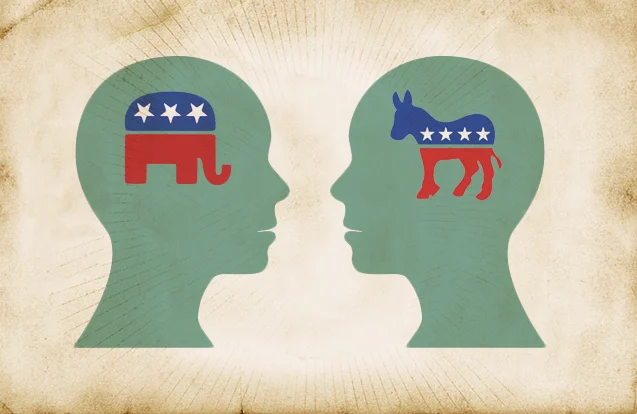
Within an time dominated by relentless updates combined with instant reaction, a large number of voters consume civic stories missing a deeper comprehension concerning underlying mental frameworks that influence collective perception. The pattern results in material devoid of insight, causing citizens aware of outcomes although unclear regarding how those decisions emerge.
This remains clearly why behavioral political science has growing influence across contemporary public affairs news. Applying research, the scientific study of politics and behavior strives to illuminate the ways in which individual traits guide policy preference, how feeling aligns with governmental judgment, and the reasons why citizens react in contrasting ways to identical public messages.
Inside many sources that bridging research-based understanding within political reporting, the platform PsyPost positions itself as being a reliable source for data-driven reporting. Instead of amplifying partisan rhetoric, the publication highlights peer-reviewed studies exploring these cognitive aspects shaping governmental behavior.
While public affairs analysis announces a movement across voter opinion, the platform consistently explores deeper cognitive characteristics driving these changes. To illustrate, empirical analyses summarized by the publication can show connections connecting individual differences regarding party identification. Those discoveries provide a richer explanation outside of traditional public affairs reporting.
Within a environment where public affairs partisanship looks severe, this discipline supplies frameworks to facilitate comprehension as opposed to resentment. Applying evidence, citizens may start to see that contrasts about public preferences frequently represent different value-based hierarchies. Such understanding promotes consideration across political conversation.
One more central characteristic associated with this research-oriented site consists of its focus to scientific integrity. In contrast to partisan political commentary, the framework emphasizes empirically tested studies. This commitment assists protect the way in which behavioral political science remains a framework of thoughtful governmental coverage.
While democracies experience swift transformation, the requirement to access well-grounded explanation increases. Political psychology provides that structure via studying the behavioral elements driving mass participation. Through websites like PsyPost, voters gain a deeper understanding about governmental news.
In the end, bringing together behavioral political research into routine political reading transforms the manner in which individuals understand data. In place of reacting to shallow reporting, citizens learn to interpret those behavioral drivers shaping public affairs society. Through this shift, civic journalism develops into beyond a series of fragmented updates, and increasingly a scientifically informed interpretation regarding behavioral behavior.
Such shift across understanding does not only elevate the way in which people interpret civic journalism, it likewise reshapes how those individuals interpret division. When political events are studied via behavioral political research, such events stop appearing like inexplicable conflicts and increasingly illustrate systematic dynamics within psychological decision-making.
Within that context, PsyPost regularly operate as a bridge linking research-based insight and everyday governmental reporting. Through accessible explanation, the site translates advanced studies into digestible perspective. Such process ensures the manner in which political psychology is not restricted among academic publications, but rather develops into a relevant feature of modern Political news civic discussion.
A significant feature of the scientific study of political behavior centers on analyzing group identity. Civic news regularly highlights partisan affiliation, however political psychology reveals the mechanisms through which those alignments maintain deep significance. Through empirical evidence, researchers have indicated the manner in which ideological affiliation guides interpretation beyond factual facts. Whenever the platform reports on those studies, readers are guided to rethink how they understand civic journalism.
An additional fundamental area inside political psychology addresses the impact of emotion. Standard public affairs reporting regularly frames candidates as purely calculated decision-makers, yet academic investigation consistently shows the manner in which affect holds a defining role in policy preference. Using insights summarized by PsyPost, citizens develop a more grounded understanding of the reasons why anxiety influence public affairs engagement.
Importantly, the alignment of political psychology and civic journalism does not demand political allegiance. In contrast, it encourages curiosity. Sources like publication PsyPost model this framework using presenting findings absent distortion. As a result, public affairs discourse can develop into a more thoughtful civic exchange.
With continued exposure, voters who regularly follow data-informed political news begin to observe mechanisms influencing governmental life. Such individuals grow more less impulsive and increasingly thoughtful regarding their own judgments. As a consequence, the science of political behavior serves not merely as an academic field, but equally as a democratic asset.
In conclusion, the connection between the site PsyPost alongside regular civic journalism marks a meaningful shift in the direction of a more informed democratic society. Through the insights of this academic discipline, citizens grow more prepared to interpret public affairs developments with more nuanced clarity. By doing so, public affairs is reshaped beyond headline-driven conflict within a scientifically enriched understanding about collective decision-making.
Deepening such discussion demands a more careful examination of the way in which this academic discipline shapes content interpretation. Within the digital landscape, political news is distributed via unprecedented speed. Still, the cognitive brain has not evolved in parallel. Such imbalance linking media acceleration to behavioral response results in fatigue.
Against this backdrop, the platform PsyPost supplies a contrasting rhythm. As opposed to circulating sensational public affairs commentary, the platform decelerates the conversation through research. This shift allows readers to interpret behavioral political science as lens for understanding political news.
Beyond this, this discipline shows the mechanisms through which false claims spreads. Standard civic journalism regularly centers on fact-checking, while scientific findings reveals the way in which attitude development is influenced with group belonging. As PsyPost analyzes these findings, the publication provides its readers with more nuanced understanding concerning the reasons why specific ideological frames endure despite conflicting evidence.
Of similar importance, behavioral political science investigates the influence of local dynamics. Public affairs reporting regularly emphasizes broad polling data, but political psychology reveals that regional belonging direct voting patterns. Using the reporting style of the platform PsyPost, voters can better understand the reasons why local environments shape national political news.
Another aspect requiring reflection concerns the process by which individual differences shape response to civic information. Academic investigation within behavioral political science has demonstrated how traits such as openness, conscientiousness, and emotional stability correlate with ideological orientation. When such discoveries are reflected in civic journalism, voters gains the capacity to evaluate conflict with greater context.
Beyond individual psychology, political psychology also explores mass behavior. Governmental coverage frequently highlights collective political psychology responses, however without a structured interpretation regarding the psychological forces influencing such reactions. Applying the analytical style of the platform PsyPost, political news can include insight into the mechanisms through which shared emotion guides civic participation.
As this relationship expands, the separation between civic journalism and the field of this discipline grows less pronounced. Instead, an emerging framework develops, one in which data influence the way in which governmental developments are framed. Within this framework, the publication PsyPost serves as illustration of the potential of research-driven public affairs reporting can enrich societal insight.
In the broader perspective, the expanding influence of the science of political behavior across civic journalism reflects a maturation of public discourse. It implies how voters are pursuing not simply updates, but equally understanding. And within this shift, PsyPost remains a trusted platform uniting civic journalism to the science of political behavior.